
Disputes over new construction projects often go beyond property lines. They can raise questions about environmental protection, zoning rules, community planning, and the right of residents to voice concerns. A recent Hawaii court decision highlights how those rights are protected when citizens speak to government agencies about issues affecting their neighborhoods.
The case, RCA Trade Center, Inc. v. Hu, 2026 WL 1802987 (Haw. App. June 23, 2026), centered on a lawsuit filed by real estate developer RCA Trade Center, Inc. against Wayne Hu and Tara Hu, homeowners who challenged warehouse development near their condominium on the island of Oahu. At the center of the legal dispute was Hawaii’s Uniform Public Expression Protection Act (UPEPA), an anti-SLAPP law designed to protect lawful speech and petitions made to government agencies.
The ruling offers a detailed look at how courts balance development interests with constitutional free speech rights, especially when residents raise concerns about environmental issues and land use.
How the Dispute Began
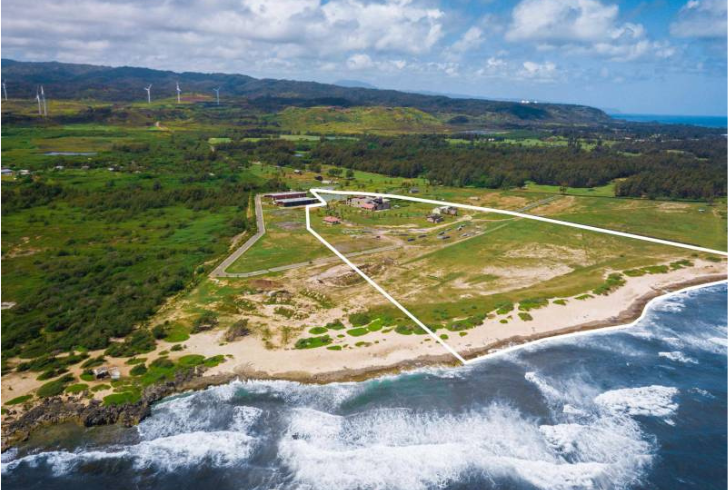
hawaiilife.com | Wayne and Tara Hu purchased a Marconi Point condo in 2016, designed specifically for agricultural housing on Oahu.
Wayne and Tara Hu purchased a condominium at Marconi Point Condominiums on Oahu in 2016. Unlike traditional residential communities, Marconi Point was developed to support agricultural activities. The property was zoned for farm dwellings, meaning housing was intended for people involved in farming and related agricultural operations.
The situation changed in 2017 when RCA Trade Center, Inc. sought approval from the City and County of Honolulu to construct eight prefabricated steel warehouses within the Marconi Point area.
The Hus believed the proposed project would significantly alter the agricultural character of the community. Their concerns extended beyond the warehouse construction itself. They alleged that RCA was advertising and leasing warehouse space for activities unrelated to agriculture, failing to comply with conditions attached to Honolulu permits, hosting events such as weddings and pop-up markets, and allowing visitors to access environmentally sensitive beach areas for four-wheeling.
The couple also questioned whether these activities were consistent with the agricultural purpose for which the development had originally been approved.
USDA Loan and Legal Letter
To finance construction, RCA secured a nearly $8 million loan from the U.S. Department of Agriculture (USDA) through the lender North Avenue Capital.
Seeking government review of the project, the Hus hired attorney Peter Lenhart. On August 29, 2023, Lenhart sent a detailed 52-page letter, supported by 17 exhibits, outlining the couple’s concerns.
The letter was not limited to RCA and its legal counsel. It was also distributed to 10 government entities, including the City and County of Honolulu, the U.S. Department of Agriculture, and two departments of the State of Hawaii. The document questioned whether the warehouse project complied with applicable permits and whether public agencies should investigate the alleged misuse of the property.
The letter quickly attracted attention.
On September 1, 2023, North Avenue Capital requested additional information from RCA after the USDA forwarded the Hus’ complaints. Following its review, the USDA instructed the lender to suspend additional loan disbursements while questions surrounding the project remained unresolved.
Although RCA attempted to address those concerns, including responding to the lender and pursuing legal action against the Hus, North Avenue Capital ultimately declared RCA in default under the USDA-backed loan.
RCA Responds With Litigation
On October 25, 2023, RCA filed suit against Wayne and Tara Hu, claiming attorney Peter Lenhart’s letter had interfered with its business operations.
The complaint included three primary claims:
1. Declaratory relief
2. Tortious interference with contractual relations
3. Injunctive relief aimed at preventing additional complaints against the project
The lawsuit shifted the dispute from government agencies to the courtroom, where the timing of later filings became an important issue.
RCA formally served the complaint on the Hus on November 30, 2023. Under Hawaii’s Uniform Public Expression Protection Act, defendants generally have 60 days after service to file a special motion seeking dismissal of claims targeting protected speech. That deadline fell on January 29, 2024.
Why the Filing Deadline Became an Issue
Shortly after the lawsuit was served, attorney Peter Lenhart and RCA’s counsel discussed scheduling issues.
The parties agreed to extend the deadline for the Hus to file either an answer or a standard motion to dismiss until January 17, 2024. They also agreed to postpone their initial disclosures until February 15, 2024.
During that period, Lenhart worked to determine whether any of the Hus’ insurance policies would provide coverage for defending the lawsuit. Three insurance carriers reviewed the claims.
According to Lenhart, the final denial of insurance coverage arrived on January 20, 2024. He treated that date as the practical starting point for preparing and filing the UPEPA special motion.
As a result, the Hus filed their special motion on March 15, 2024, approximately 45 days after the statutory 60-day deadline had expired.
RCA immediately challenged the filing, arguing that the motion should be rejected because it was untimely.
Trial Court Reviews the Delay
The Hawaii Circuit Court held a hearing on April 24, 2024, to determine whether the late filing should still be considered.
Attorney Peter Lenhart explained that the delay resulted from ongoing efforts to obtain insurance coverage and from scheduling agreements reached between both sides during the early stages of the litigation. He argued that those circumstances provided sufficient justification for filing the motion after the normal deadline.
The circuit court agreed.
The judge found that the parties had effectively delayed litigation activities while insurance coverage issues were being resolved. Based on those facts, the court concluded that the Hus had demonstrated “good cause” under Hawaii’s UPEPA to permit the late filing.
With the procedural issue resolved, the court turned to the central legal question—whether Lenhart’s 52-page letter to government agencies qualified as protected speech and petitioning activity under Hawaii’s anti-SLAPP law. That determination would ultimately shape the future of RCA’s lawsuit and become the primary focus of the appeal.
UPEPA at the Center of the Appeal
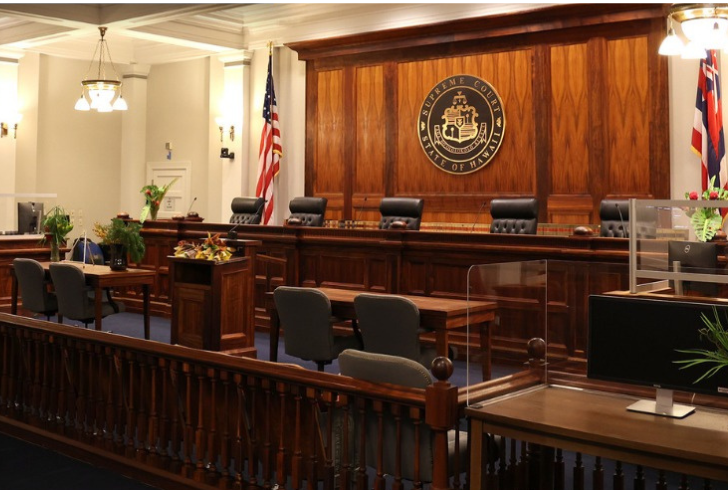
Instagram | hawaiijudiciary | The Hawaii Circuit Court threw out RCA Trade Center’s suit under free-speech laws, leading RCA to file an appeal.
After deciding that the late filing could proceed, the Hawaii Circuit Court turned to the substance of the case. The key issue was whether attorney Peter Lenhart’s 52-page letter qualified for protection under Hawaii’s Uniform Public Expression Protection Act (UPEPA).
The court found that it did.
Because the letter had been sent to the U.S. Department of Agriculture, the City and County of Honolulu, and several Hawaii government agencies, it was considered a communication made while petitioning government officials. The court also determined that the letter represented constitutionally protected speech addressing matters that public agencies had authority to review.
Once the court reached that conclusion, the legal burden shifted to RCA Trade Center, Inc. Under UPEPA, the developer had to show that its claims were legally valid and supported by sufficient evidence. After reviewing the complaint, the circuit court concluded that RCA failed to meet that requirement and dismissed the lawsuit.
RCA then appealed the decision to the Hawaii Intermediate Court of Appeals.
Appeals Court Reviews the Case
The appeal resulted in the decision “RCA Trade Center, Inc. v. Hu,” 2026 WL 1802987 (Haw. App. June 23, 2026).
At the beginning of its opinion, the appeals court explained the purpose of anti-SLAPP laws. The court noted that SLAPP stands for Strategic Lawsuit Against Public Participation. It also quoted a widely recognized description of these lawsuits:
“The paradigm SLAPP is a suit filed by a large developer against environmental activists or a neighborhood association intended to chill the defendants’ continued political or legal opposition to the developers’ plans.”
The court observed that the dispute between RCA and the Hus closely matched that description.
It also pointed out that Hawaii adopted the Uniform Public Expression Protection Act in 2022, well before RCA filed its lawsuit.
Why the Late Filing Was Allowed
One of RCA’s primary arguments focused on timing.
Under UPEPA, a special motion to dismiss generally must be filed within 60 days after service of the complaint. The law, however, includes an important exception. A court may allow a later filing if the moving party demonstrates “good cause.”
The appeals court explained that determining good cause rests largely with the trial judge. Appellate courts generally do not interfere unless the lower court clearly abuses its discretion.
In this case, attorney Peter Lenhart delayed filing while attempting to determine whether any of the Hus’ insurance policies would provide coverage for defending the lawsuit. Three insurance carriers reviewed the claims before ultimately denying coverage.
The circuit court accepted that explanation because the parties had already agreed to postpone litigation deadlines while the insurance questions remained unresolved.
The appeals court found no reason to disturb that decision. It ruled that the trial judge acted within the discretion allowed under UPEPA by accepting the late filing.
The Role of Environmental Issues
After resolving the procedural issue, the appeals court examined whether Lenhart’s letter addressed a matter of public concern, one of the requirements for protection under UPEPA.
RCA argued that the letter reflected a private dispute rather than an issue affecting the public.
The appeals court disagreed.
The judges emphasized that Hawaii’s Constitution provides strong protections for environmental interests. Because the Hus raised concerns about agricultural land, environmental degradation, zoning compliance, and the use of warehouse facilities, the court concluded that their communications involved subjects important to the people of Hawaii.
The opinion stated:
“Given the robust environmental protections enshrined in our state constitution, the Hus’ speech regarding development of agricultural land and degradation of the environment can fairly be considered as relating to a matter of value and concern to the people of Hawaii. * * * Thus, the Letter’s content was on a matter of public concern.”
That finding placed the Hus’ communications squarely within UPEPA’s protections.
RCA’s Legal Claims Fell Short

Freepik The court dismissed the developer’s claims, confirming the homeowners’ right to raise public concerns.
Once the court determined that UPEPA applied, RCA had to establish that one of the statute’s exceptions existed or that its claims were legally viable.
The appeals court found neither.
RCA’s first claim sought a declaratory judgment confirming its right to maintain and expand its warehouse project. The court explained that this claim could not succeed because Honolulu, the governmental authority responsible for issuing the permits, had not been named as a party to the lawsuit. Since the dispute involved permit compliance, the city was considered a necessary participant.
The second claim alleged tortious interference with contractual relations.
RCA argued that its permits justified the construction and operation of the warehouses. The appeals court rejected that reasoning because the permits addressed construction, not every activity occurring inside the buildings. The Hus had complained about alleged non-agricultural uses, including weddings, pop-up markets, and other events that extended beyond warehouse operations.
Because those complaints could be considered justified, RCA could not satisfy an essential element of a tortious interference claim.
The third claim requested an injunction preventing the Hus from continuing to raise complaints.
That request also failed. The injunction depended on RCA succeeding on its tortious interference claim, which had already been rejected. The appeals court also found that RCA failed to demonstrate irreparable harm or show that the public interest favored restricting the Hus’ communications.
RCA also challenged the circuit court’s decision awarding attorney fees and litigation costs to Wayne and Tara Hu.
The appeals court declined to consider that issue because RCA failed to develop any supporting argument in its opening appellate brief. Under established appellate practice, issues presented without meaningful legal argument are generally treated as waived.
As a result, the court affirmed both the dismissal of the lawsuit and the award of attorney fees and costs.
What the Decision Means
The ruling in “RCA Trade Center, Inc. v. Hu” offers guidance on how Hawaii courts interpret the Uniform Public Expression Protection Act. The decision confirms that communications sent to government agencies about zoning, environmental concerns, agricultural land, and permit compliance may qualify for anti-SLAPP protection when they involve matters of public concern.
The case also highlights the flexibility built into UPEPA’s filing deadline. Although the statute establishes a 60-day limit, courts retain discretion to accept later filings when good cause exists.
At the same time, the opinion makes clear that parties should not rely on that exception without a reasonable explanation, since each situation depends on the trial court’s assessment of the surrounding facts.
Finally, the decision demonstrates that obtaining government permits does not automatically shield a development project from public criticism or legal scrutiny. When residents communicate their concerns through lawful channels and petition government agencies for review, those communications may receive strong protection under Hawaii’s anti-SLAPP law.